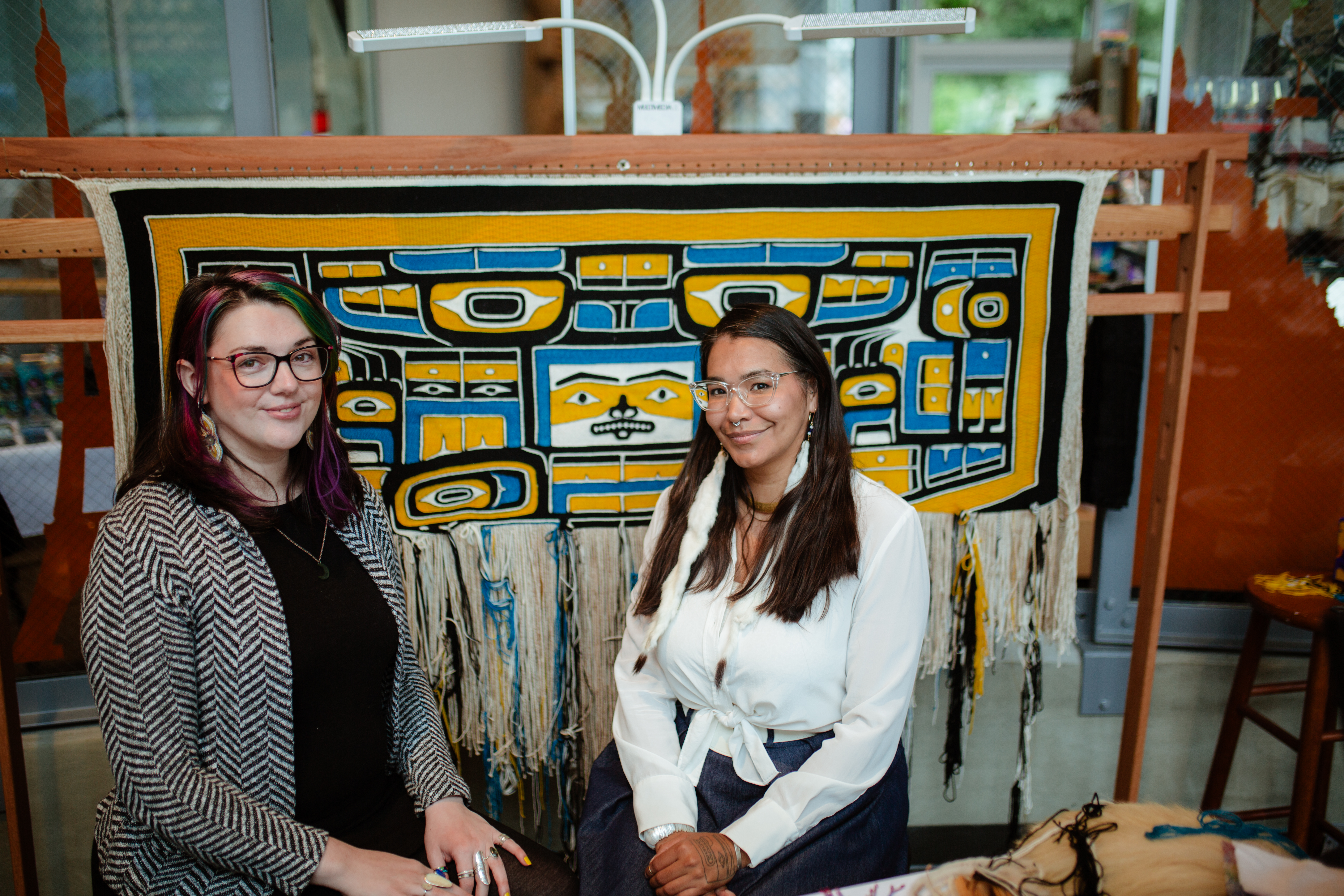
Robe Cutting Ceremony for Haa Shagóoní on Aug. 19
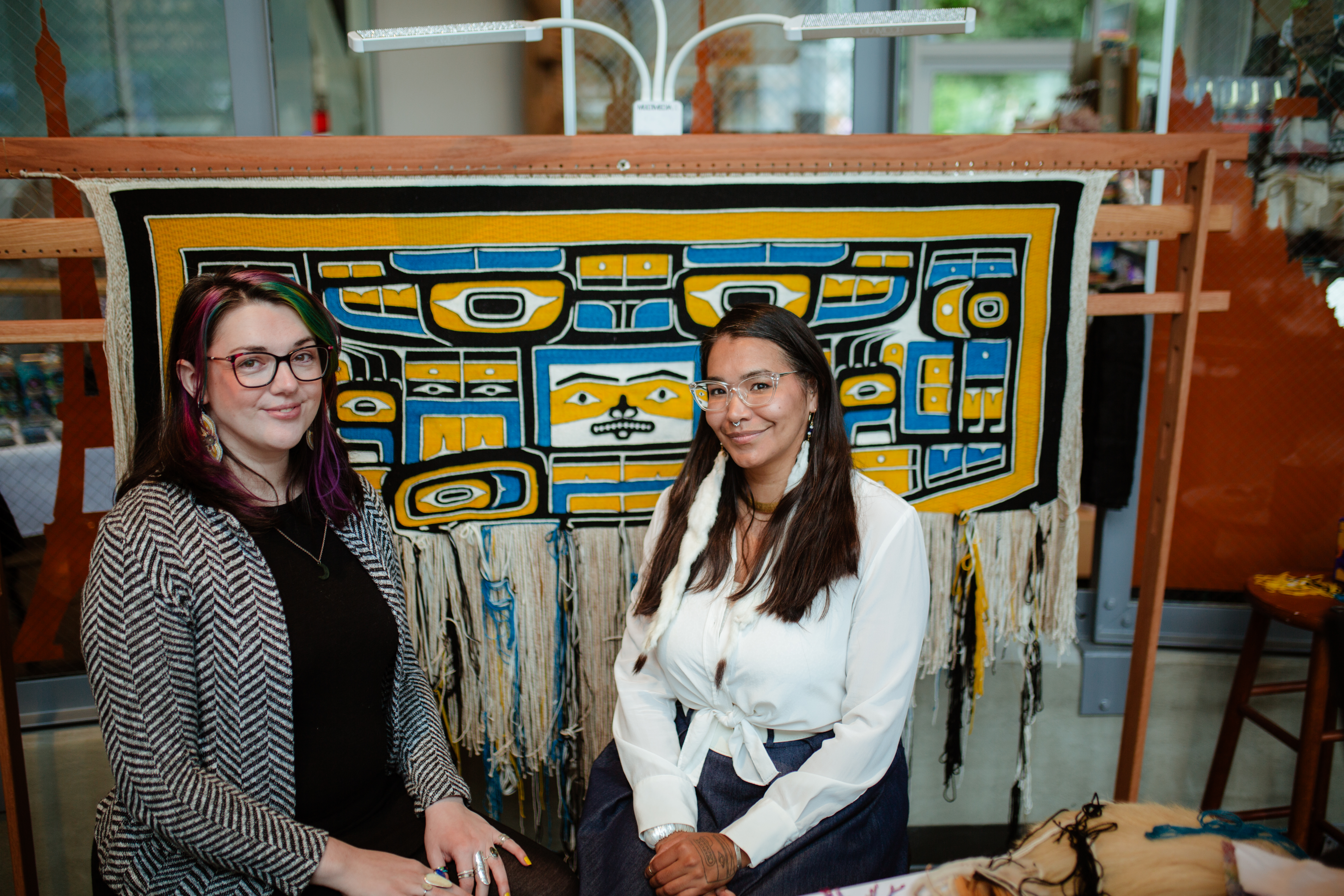
Naax̱éin, or ceremonial Chilkat weaving, is a traditional Tlingit art form with deep cultural significance. These robes often reflect clan crests, histories and connections carried forward through generations.
Weavers Donedin Jackson and Rae Mills will celebrate the completion of their Diving Whale Ceremonial Chilkat Robe after two years of careful, time-intensive work. The robe will be cut from its loom and then placed on the weavers’ shoulders to be witnessed by those present and welcomed with song.
Chilkat weaving is the most complex weaving tradition in the world. These robes carry deep cultural significance and often reflect clan crests, histories, and connections carried forward through generations.
The robe will eventually be placed on permanent display in a place of honor in the Mountain House at the top of Mount Roberts. Those who attend will receive a Chilkat tassel in recognition of their role as witnesses, based on availability.
More from, and about the artists
Naax̲éin, Ceremonial Chilkat Robes, aren’t just beautiful “things” that are created. They are memory. They are community. They are living ancestors. They are born from history, songs, and story. This is where children are taught who we are, where we come from, and how to care for each other. They show the world that despite all the hardships we’ve endured, we didn’t just survive, we thrive. That is why our weaving is important to show in public spaces. To show our work. To show our stories. To share with other people, other places, other worlds. While the world continues, we remain here. Among songs. Woven in the threads. Healing ourselves with what our ancestors gave us through our hands. Connecting us to a place, time, and sense of self. Every person who witnesses this story carries a piece of it with them, ensuring that this work reaches even further in time and space.
The weaver Donedin Jackson is a citizen of Teslin Tłingit Council First Nation in the Yukon Territory, Canada. She was named Shakóon or Ts’udugáxh by her great-grandmother Tzint Carrie Jackson, the last Medicine Person of Déisłeen, Teslin. She is of the Eagle moiety and is a Yeił Koowú Ravenstail and Naax̲éin Chilkat weaver, teacher, and a Tłingit language learner.
Donedin is the great great great granddaughter of the late Dr. Jake Jackson, known as the last inland Tłingit Medicine Man and granddaughter to Keyishi Wilma Magill, she is inland Tłingit on her late father Nashúk Elmer Jacksons’ side. She began learning her traditional language and practices to decolonize her life in 2019. In her journey to reindigenize herself and her life, she has had the great honour to work with uniquely gifted Traditional Knowledge Keepers.
Traditionally trained as a Ceremonial Northwest Coast Textile Weaver, she completed her apprenticeship under Wooshkindein Daa.áat Lily Hope in 2024, and is a 4th generation Shaxʼsaani Kéekʼ Jennie Thlunaut Weaver and Ancestral Knowledge Keeper. She now teaches and demonstrates NorthWest Coast traditional weaving practices, giving them back to the people they belong to.
Donedin partnered with Shaawat gé Rae Mills (they/she), Tłingit Kaach.ádi X’áakw Hít (Raven Freshwater Marked Sockeye House) child of Was’ineidi. Rae was born and raised in Southeast Alaska, and adopted into the Kaach.ádi clan by Ḵaanáḵ Ruth Demmert at a young age. They had the privilege of witnessing weaving classes growing up, held by culture bearers such as Delores Churchill, Della Cheney, and Cheryl Samuel.
This is where they learned traditional harvest and preparation of weaving materials such as cedar, spruce root, and woolen fibers. Raised with two parents who shared a passion for art, Rae knew weaving would eventually be a part of her life. A journey that finally started in 2021, apprenticing under both Lily Hope Wooshkindein Da.áat and Kay Parker.
Trained as a Northwest Coast Traditional Textile Weaver, Rae is experienced in Yéil Koowú Ravenstail, Naax̱éin Chilkat, and cedar weaving. Since 2023 she has traveled within the NorthWest Coast teaching our traditional knowledge. They were one of five mentor weavers for the two Pride Robes woven at the Zach Gordon Youth Center in Juneau, Alaska, from 2024 to 2026 that will continue to be used and witnessed in community Ceremony for generations to come. Rae’s ceremonial weaving collection can be found in the wider community, used and witnessed as At.óow, regalia brought to life through sacred ceremonies, potlatches, and memorials. They are currently the first weaver documenting Non-binary peoples in a full size Yéil Koowú Ravenstail Robe, woven communally at the university in Juneau, where they currently reside. Traditional weaving has served as a healing practice that has sparked a deeper knowing of the sacred, both within and without.
Naax̱éin, Chilkat Weaving, are costal peoples historical documentation. Each design is intellectual property that carries a story, and each story is owned. If someone tells a story they don't have permission to tell, it's considered theft. Lukaax.ádi Elder Austin Hammond once used a Chilkat Robe in the U.S. courts in lieu of a ‘written deed’ to show his clan’s ownership of Chilkoot homelands. Traditional Ceremonial Weaving is held in the highest regard, are sacred living beings, and whole family lines are tasked with their caretaking as they live for hundreds of years.
Naax̱éin Chilkat weaving is considered the most complex weaving practice known to man, due to the fact that the warp hanging from the loom is non-warp weighted, meaning there is no tension on the ends of the warp as they hang from the loom. There is no shuttle, brush, beater, combs or knots used in the creation of our traditional textiles. Every single stitch is placed by hand, at the time of weaving, and the tension comes from the weaver themselves as they weave. It is also the only weaving in the world that can weave a perfect circle.
Weavers have to take in consideration the life of the ancestor that they create, and since this Robe was commissioned by, and will live its life at the Goldbelt Heritage Tram, acid dyes were chosen due to the Robes prolonged exposure to UV lights. Traditionally Robes rest in hand carved cedar bentwood boxes when not in use.
Outlawed until 1976, there have only been 12 Weavers at any given time in the last 300 years that kept the traditional and ceremonial practice of creating our ancestors in this way alive. Now, due to the many efforts of the masters, there are over 30 Weavers that carry this practice today.
This Naax̱éin, Ceremonial Chilkat Robe, has been named Haa Shagóoní, meaning Our Most Precious in the Łingit language, and contains a Diving Whale design. The Diving Whale story and design has been gifted to the public at large, so anyone can weave, wear, or caretake one and cause no offence. This Ceremonial Robe has been commissioned by the Goldbelt Heritage Tramway, an entity whose shareholders are the indigenous peoples of Aawk’ Kwaan, Juneau, Alaska. Haa Shagóoní will live as education and demonstration for the public and will be housed at the top of the Tram, to be used and witness in ceremony by its traditional people. A living testament to the sacred, it was created by people who carry the feminine spirit in support of the knowledge that has been passed down through generations as a balance to the already prolific work done by men.
The youth that showed interest were encouraged to participate, and learned how to carry traditional practices in a good way, and took their first steps as apprentice weavers. They are now capable of continuing the practice that they were given with integrity and holding space for traditional values, perpetuating it for generations to come. The ripple effect of this Robe will be felt for generations, not only with the Ancestor itself but through the people it has touched.
Gunałchéesh, thank you for bearing witness as we create living history. We hope to see you there!
Photo credit: Sydney Akagi
Latest News
Showing top 5 news items from the last 90 daysJuneau Voters: Make Your Voice Heard
9/25/2026Goldbelt encourages shareholders, families and community members in Juneau to make a plan to have their voices heard and to consider how candidates and ballot measures align with Goldbelt initiatives and values, including strong communities, responsible stewardship and opportunities for future generations.

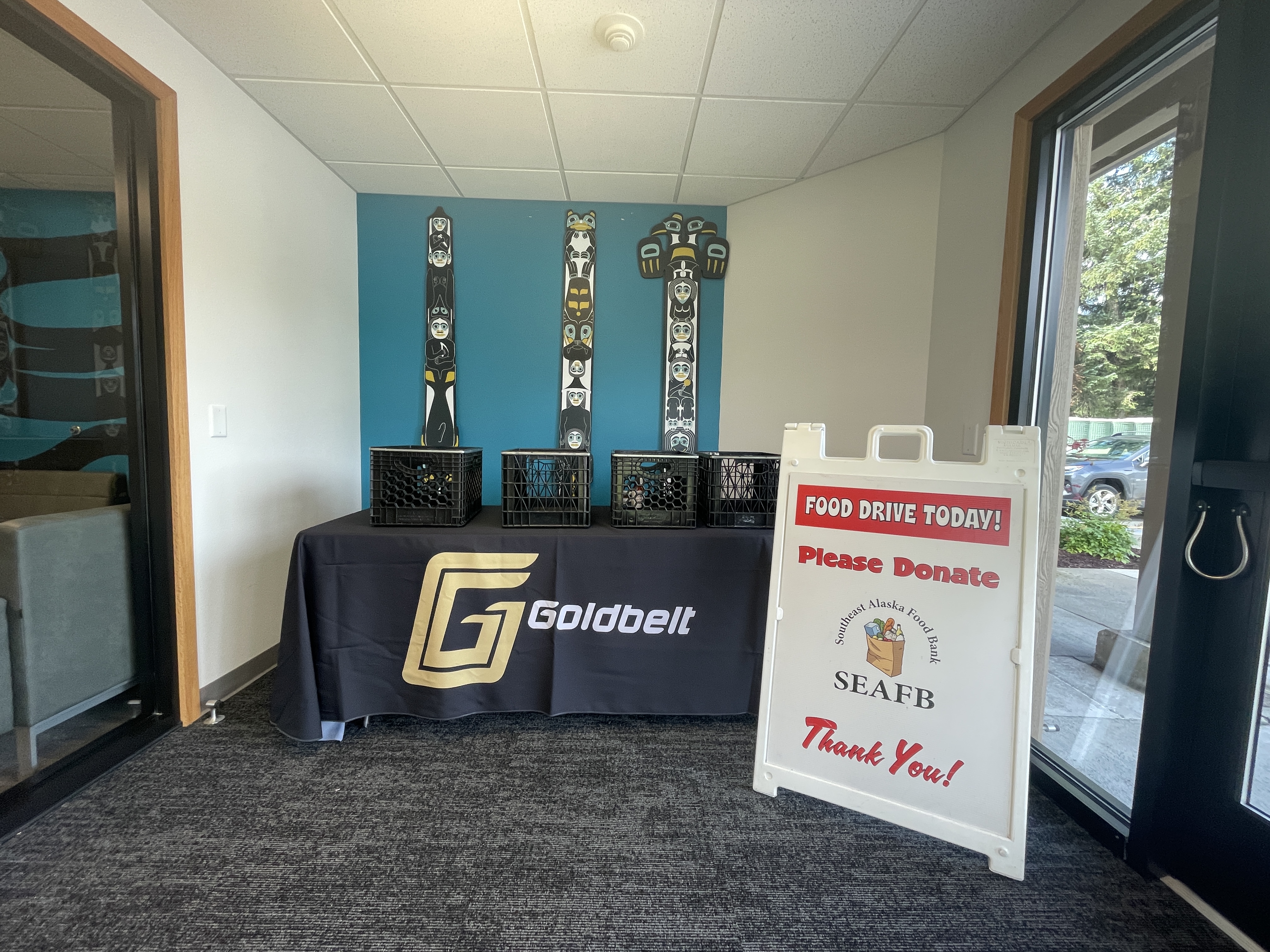
Goldbelt Supports Hunger Action Month: Food Drive All September
9/1/2026This September, Goldbelt is leading a community food drive in support of the Southeast Alaska Food Bank and Hunger Action Month, and we invite our shareholders, employees, and community to join us.
Goldbelt’s Strength Exists in Our Ability to Support Our Shareholders
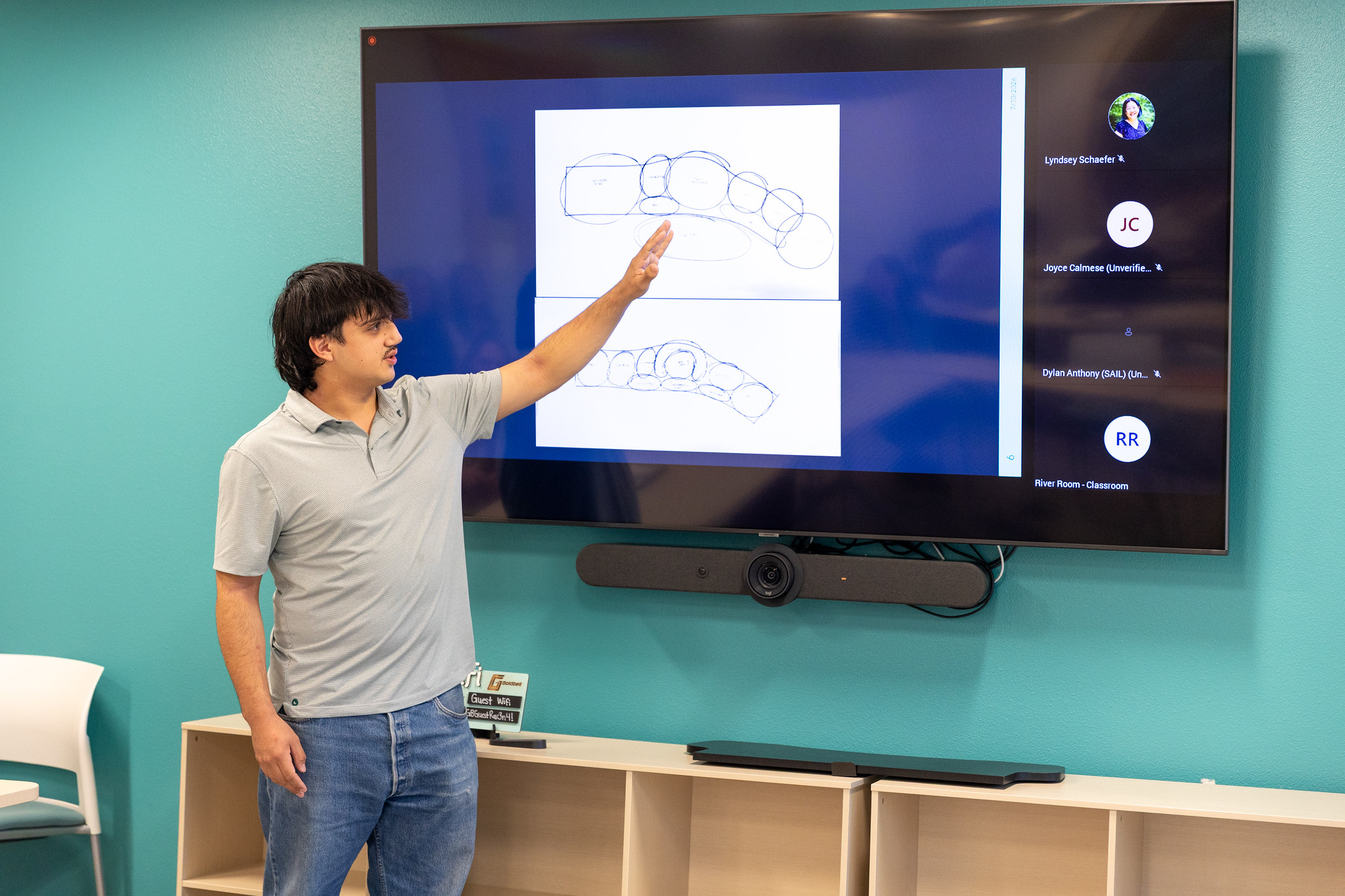
9/1/2026For summer intern and scholarship recipient, Hudson Tripi, learning is motivated by design, place, culture, and his ancestral home. During his summer 2026 externship with MRV Architects, Tripi worked on a portfolio project to reimagine the Auke Bay Ferry Terminal.
Robe Cutting Ceremony for Haa Shagóoní on Aug. 19
8/14/2026Weavers Donedin Jackson and Rae Mills will celebrate the completion of their Diving Whale Ceremonial Chilkat Robe after two years of careful, time-intensive work. The robe will be cut from its loom and then placed on the weavers’ shoulders to be witnessed by those present and welcomed with song.